KILTENNEL TRAIL · HISTORY STOP 3 OF 5
The Original Harbour
Hidden beneath the sands of Courtown lies a fascinating reminder of the area's rich maritime heritage.
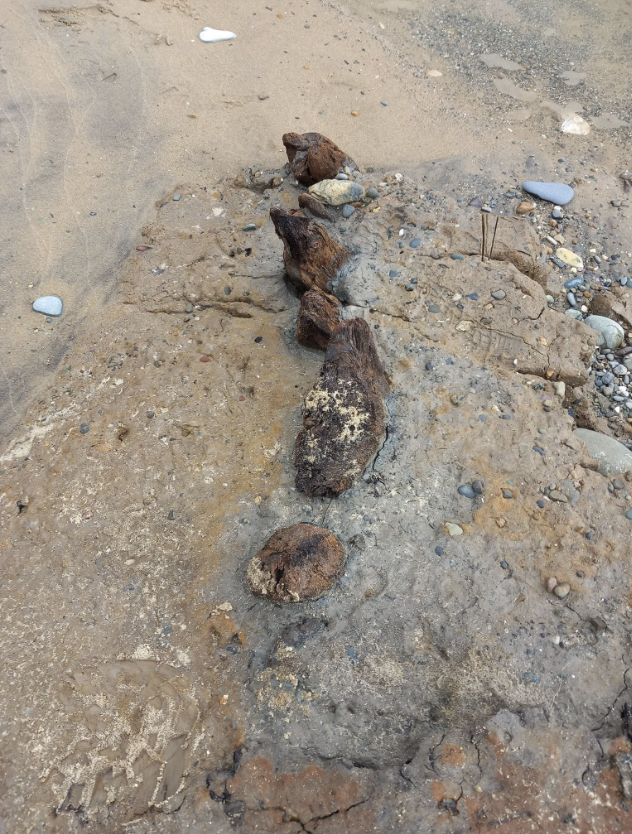
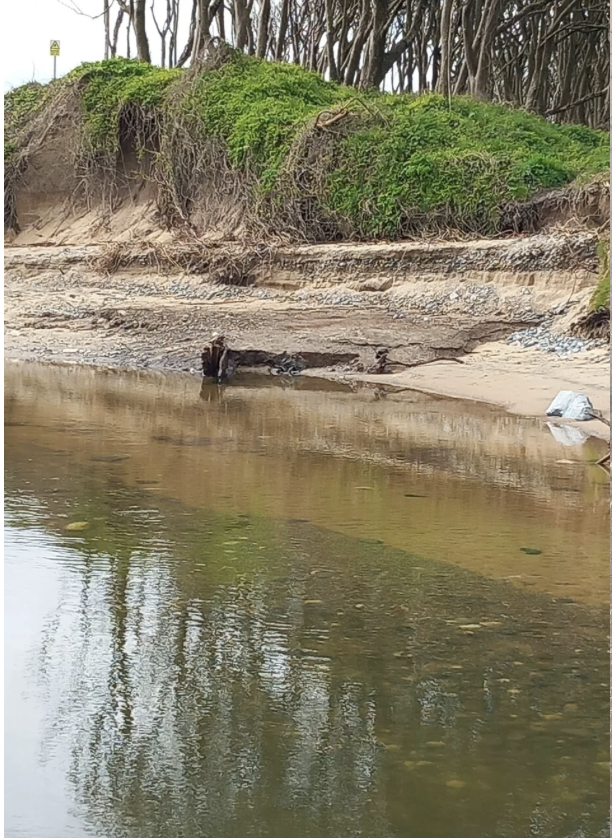
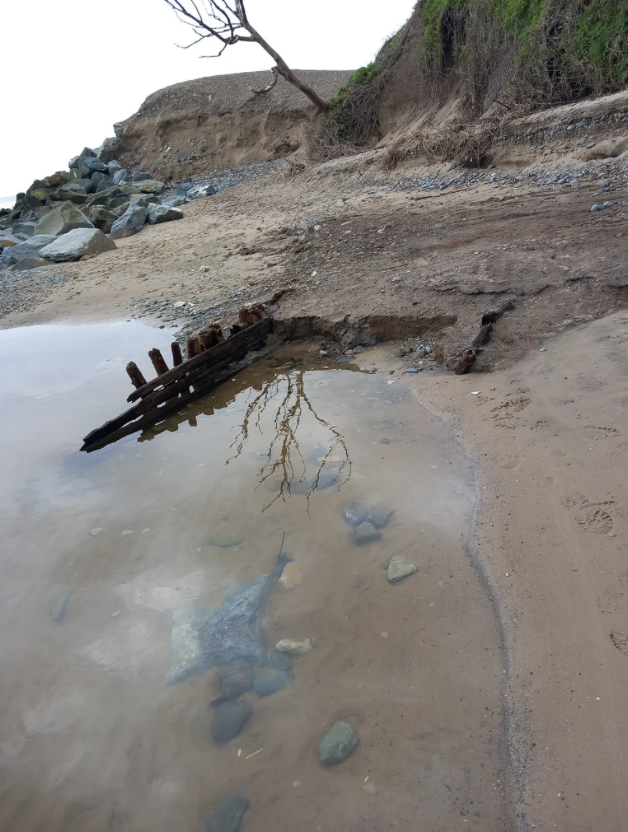
Following the powerful storms of 2024, large sections of sand were washed away, revealing a series of ancient oak timbers. At first glance, many believed they were the remains of a long-lost boat. However, local historians soon identified them as part of the original wooden footway that once crossed the river and sandbar.
This historic walkway, known locally as the Fisherman's Walk, provided an important route between Courtown, Ballymoney, and Tara Hill. It allowed fishermen, traders, and local residents to cross safely without passing through the Courtown Estate, making it an essential part of everyday life for generations.
Remarkably, these timber structures have survived for over two centuries. They were preserved beneath layers of blue marl and river sediment, where the lack of oxygen protected the oak from natural decay. The exposed remains are believed to date from the early 1800s, although parts of the structure may be even older.
During the Great Famine, significant engineering works transformed the local landscape. A relief project saw a canal blasted through solid rock, redirecting the Ounavarra River away from its natural course and into the harbour basin. This new channel improved access to the harbour while also providing much-needed employment during difficult times.
Even today, nature continues to remind us of the river's original path. During periods of heavy rainfall and flooding, the Ounavarra often returns to its historic course, flowing across the sandbar before reaching the sea.
After the storms, the exposed timbers were gradually covered once again by shifting sands. While they are no longer visible, this natural reburial will help preserve them for future generations and provides archaeologists with an invaluable glimpse into Courtown's past whenever nature reveals them once more.